
Signs your pool needs resurfacing
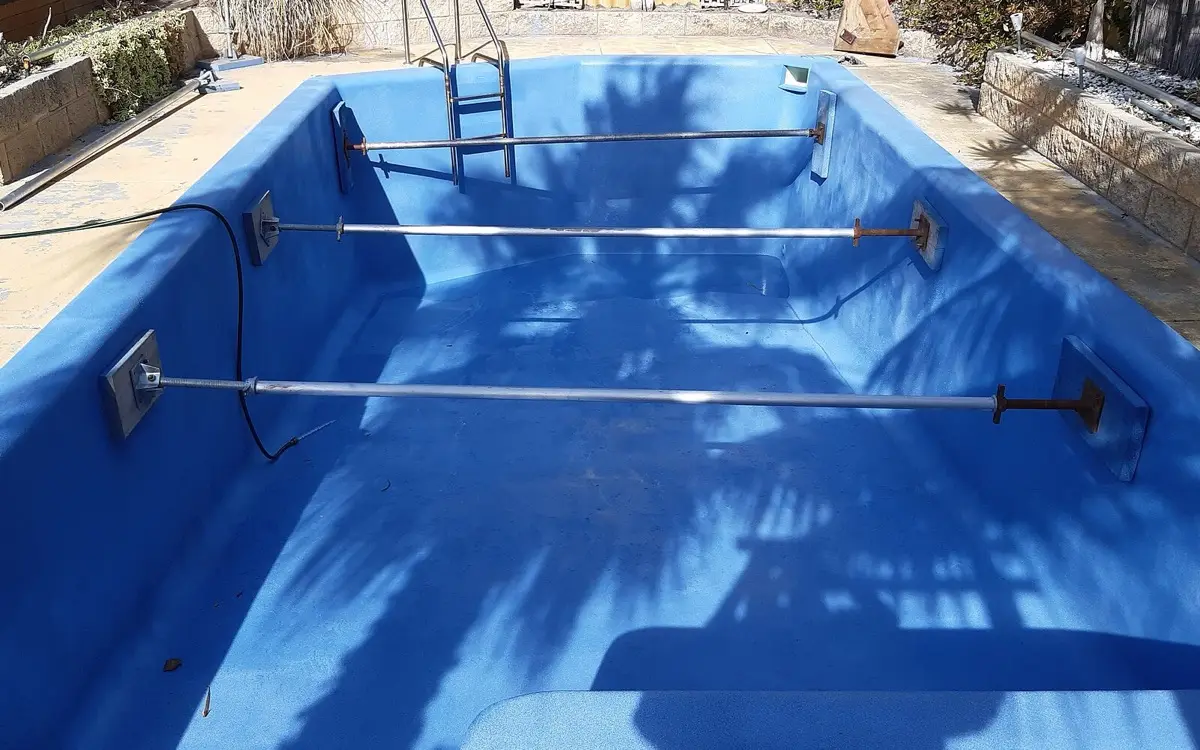
You do not need a test kit or a tape measure to start. Walk the pool with your phone, take pictures in good light, and write down what you see and where you saw it. Bring that record to the first site visit. It beats describing the pool from memory while the contractor is standing next to it.
Here is what to look at.
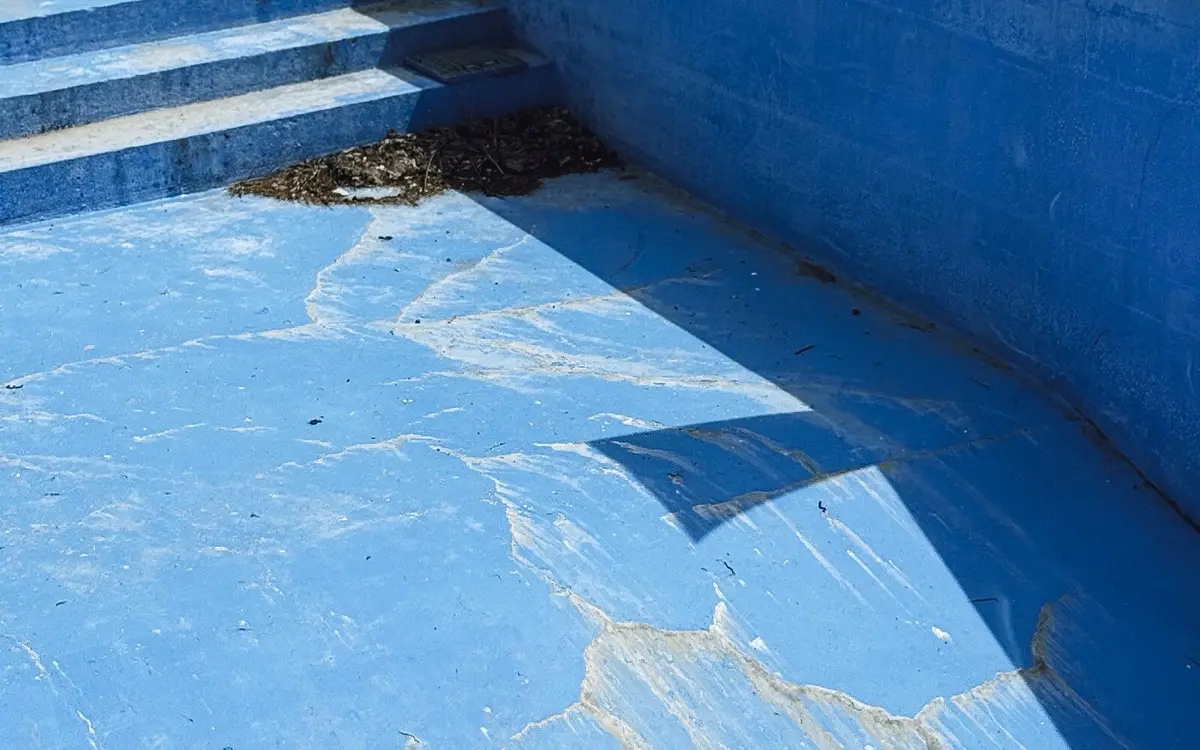
- Run a hand along the wall at the waterline and near the steps. Photograph anywhere the surface feels rough or looks like it is flaking away.
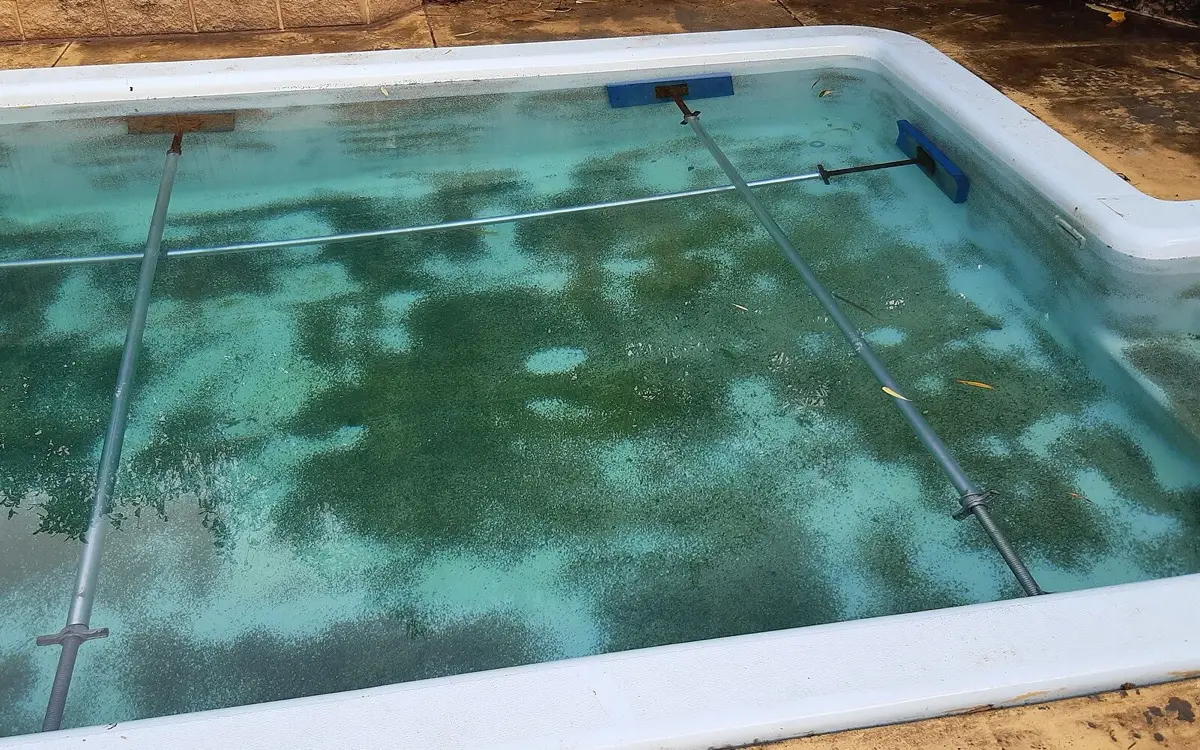
- Photograph stains. Note the color, where they sit, and when you first noticed them.
- Photograph cracks. Set a coin beside each one so the picture carries some scale, and mark the spot so you can find it again.
- Photograph anything that looks or feels different from the area beside it, and mark where it is.
- Photograph anything damp around the equipment pad or in the yard, and note where it is.
None of that is a diagnosis. A photograph of a crack is evidence, not a cause, and the cause is what decides the fix.
As general orientation before that conversation: a rough or sharp-feeling surface usually means the plaster is breaking down and turning porous, which lets it absorb more chemicals and stain faster. Cracks can be cosmetic, structural, tied to water chemistry, or tied to how the surface was originally prepped — small cracks are sometimes patchable, larger ones usually point to a full resurface. Stains that will not clean off often trace back to hard-water mineral buildup or a pH imbalance. Fading, discoloration or a chalky feel are typically UV and chemical wear. Peeling, flaking or hollow spots usually mean the surface has lost its bond, which points toward resurfacing rather than a patch. None of that replaces what a contractor sees standing on your pool deck — it is a starting vocabulary for the conversation, not a diagnosis.
Take the photos to the site visit and go through them one at a time. Ask what the contractor thinks caused each one, how they reached that conclusion, and what they would do about it. Ask them to show you on the pool rather than describe it from the patio. If a contractor gives you a price before looking at the pool, you have a price for a job nobody has looked at.
If you think the water level is dropping, raise it on its own rather than folding it into the list. Ask the contractor whether they think you have a leak, how they would confirm it, and whether that is work they do themselves or work they refer out.
At least one Las Vegas pool contractor’s own site answers this directly: they say plastering companies aren’t leak-detection specialists, and point homeowners toward a simple test first — mark the water level, wait 24 hours, and compare it against a bucket of pool water on the steps to rule out ordinary evaporation. If that points to a real leak, they recommend calling a dedicated leak-detection company to pinpoint it before any repair starts; the plastering contractor typically only fixes the surface once the leak’s location is confirmed. Ask your own contractor whether that’s how they handle it, or whether they detect leaks themselves.
Why Las Vegas pools wear out
That heading is a question, and it is one for the contractor at the site visit rather than for a search engine. Ask them for the reasoning, not just the headline.
Published guidance from a licensed Las Vegas contractor points at three things: constant UV exposure fades color and roughens the surface over time, which makes it more porous and more prone to staining; the daily swing between intense heat and cooler desert nights makes the surface expand and contract, and that repeated movement can eventually lead to micro-cracks and bond separation; and Southern Nevada’s hard water causes calcium scaling when pH and calcium hardness drift out of range. Standard plaster shows this wear fastest of the three common finishes. That is general context, not a verdict on your pool — the contractor at your site visit is the one who can say what shape your surface is actually in.
What you can do is bring the details that change the answer. Before the visit, write down:
- Whether the pool sits in full sun all day, gets afternoon shade, or spends part of the year under a cover.
- Whether it is heated, and how much you run the heater.
- Who handles the water chemistry, you or a pool service, and how regularly it gets tested.
- Where your fill water comes from and whether it passes through a softener or any other treatment.
- How old the pool is, and whether the surface has been replaced or patched before.
- What you have already tried, such as brushing, draining or a cleaning treatment.
Then ask the contractor to answer in terms of your pool rather than pools in general. An answer that would fit any pool in any city is not worth much to you. An answer that points at what they just saw on your walls is.
Finish options
Standard plaster, quartz and pebble are the three finishes to ask each contractor about. Feel is worth judging for yourself by asking for a physical sample; the cost comparison further down this page is a national estimate, not a Las Vegas number — ask each contractor to price all three for your pool on the same written quote, which puts the real comparison in one document instead of a guess.
- Standard plaster. White Portland cement, limestone sand and water; gives the pool water a soft, classic sky-blue tint. Roughly 7–10 years typical lifespan.
- Quartz. Fine quartz aggregate bonded with Portland cement; wider color range than plaster, more resistant to pool chemicals. Roughly 12–15 years typical lifespan.
- Pebble. Small natural pebbles fused into a mosaic with white cement; shifts color as light plays off the water. Roughly 15–20+ years typical lifespan.
A quick comparison is a starting point, not a decision. Ask for a sample you can hold, and ask for the address of a pool the contractor finished a few seasons back that you could look at from the gate. A sample tells you about color and texture. A finished pool tells you how the surface has held up since somebody started swimming in it.
If you are leaning toward pebble, our Pebble Tec pool finish guide covers the questions worth asking about branded finishes, warranties and authorized installers.
Ask for all three finishes priced for your pool in the same written quote. That puts the difference in one document instead of spread across separate phone calls, and it gives you something the next contractor’s quote can line up against.
Resurfacing or replastering
Ask each contractor what their label covers. Treat the word on the cover page as a headline and read the scope underneath it.
At least one Las Vegas pool contractor’s own site draws no line between the two words at all — replastering and resurfacing describe the same job: draining the pool, prepping the old surface, and applying a new plaster, quartz or pebble finish over a bond coat. What that contractor’s site does separate out are the jobs next door to it — tile, coping, decking and equipment are listed as their own categories, priced and scoped on their own rather than folded automatically into a resurfacing quote. That’s one contractor’s boundary, not a rule every quote will follow — ask yours to say in writing exactly what’s included beyond the interior surface.
That is one contractor’s answer, not a wording every contractor will use, so here is the practical version too. Ask each contractor to write down exactly what their price includes: the interior surface, the waterline tile, the coping, the deck, the steps and benches, the drain covers, any repair work, and the refill. Then compare those lists instead of the words on the cover page. Where two quotes carry the same title, ask each contractor to confirm line by line that they are describing the same work. Where the titles differ, ask the same question before you assume the jobs differ.
Our pool resurfacing overview goes through the job from the homeowner’s side. The pool replastering page covers replastering and the questions to ask about it.
What the process looks like
We name the stages here so you recognize them when a quote lists them. What happens inside each stage, and how long it takes, belongs to the contractor doing the work.
- Drain. The pool is emptied through its clean-out port to the sanitary sewer system. Las Vegas rules do not allow draining to the street, gutters or a storm drain, and never to a septic system — ask your contractor to confirm this is how they handle it.
- Prep. Generally covers removing loose or damaged plaster, pressure washing, grinding rough spots, repairing cracks, clearing calcium buildup, an acid wash where needed, and a bond coat so the new finish adheres.
- Apply. Interior finishes are typically hand-troweled on by a trained crew rather than sprayed or poured. Ask who is on the trowel and how many years they have been doing it.
- Fill. Refilling is usually done with the homeowner’s own garden hose, and the water use shows up on the homeowner’s own water bill — the Las Vegas Valley Water District notes a refill can raise that bill noticeably, so ask about timing it to manage the cost. If there’s a spa, the hose is often moved there once the pool reaches about the halfway point on the tile line, to avoid uneven hydration.
- Start-up. A separate pool-maintenance provider, not the resurfacing crew, typically handles chemical introduction, surface brushing and water balancing during the curing period. Ask your contractor who they recommend and whether they can put you in touch.
The two numbers people want up front are how long the job takes and how long before anyone can swim. We don’t publish either one here — job length and cure time depend on the pool, the finish and the crew, and a number that isn’t tied to your job would only need to be unlearned later.
Ask for both in writing, and ask what would push them out. Then work through the rest.
- Who is on site each day, your own crew or a subcontractor?
- What do you need from me, and by when?
- What happens if you open the pool up and find something the quote did not cover? Who decides, who pays, and who signs off before the work goes ahead?
- What do I have to do during start-up, and what happens if I get it wrong?
- How do I reach you if something looks wrong a week later?
What it costs in Las Vegas
The comparison table below shows a national estimate: $6,000–$8,000 for standard plaster, $7,000–$10,000 for quartz, and $7,000–$15,000 for pebble, per HomeGuide’s national contractor-cost database (April 2025). Local labor, permitting and demand can move a Las Vegas quote away from those figures in either direction — treat them as a starting point, not a number to plan a budget around.
What we can do is point your questions somewhere useful. Ask each contractor which of these changed their number: the size and shape of the pool, the condition of the surface underneath, the finish you picked, whether tile and coping are in or out of the price, how easy the yard is to work in, and what might turn up once the pool is empty. Make them answer for your pool rather than in general.
Our pool resurfacing cost guide goes through each of those in detail, and shows how to read two quotes side by side without being caught out by the bottom line. When you are ready for real numbers on your own pool, get at least two written quotes and compare them there.
How to choose a contractor
Work only with someone holding a current Nevada contractor license, and verify the number yourself instead of taking it on trust.
- Ask for the license number up front, then look it up on the Nevada State Contractors Board license search. You can search by license number, by company name, or by the name of a principal or qualified individual. For pool plastering, the classifications that cover the work are A-10 (general pools and spas), A-10C (residential plaster, coping and deck-coating repair) or A-10E (residential and commercial plaster, tile, coping and decking). A license limited to C-11 does not cover plaster finish work.
- Check that the name on the license matches the name on the quote and on the contract you are asked to sign.
- Ask to see current insurance documents rather than a verbal assurance.
- Ask for the numbers of two or three recent resurfacing customers, then call them. Ask what went wrong on their job and how the contractor handled it.
- Get a written scope naming the finish, the areas covered, the stages and the clean-up.
- Get a written list of what is not included.
- Get the warranty on paper: who provides it, what it covers, what voids it, and what upkeep is on you.
- Agree the payment stages in writing before any money moves.
Slow down if a quote is a single line with no scope, if nobody will hand over a license number, if you are pushed to sign today to hold a price, if a large deposit is wanted before work starts, or if the warranty is only promised out loud. Any one of those is a reason to ask more questions. Several together are a reason to keep looking.
Nevada law caps the advance deposit a contractor can ask for on a residential pool or spa contract at $1,000 or 10% of the total contract price, whichever is less, and full payment can never be collected up front. If a deposit request is above that, treat it as a red flag on its own.
Related work
Resurfacing is one job among several around a pool, and a quote may touch more than one of them.
- If someone suggests a cleaning treatment instead of a new surface, our pool acid wash page has the questions to ask before you agree to it.
- If the deck around the pool is part of what is bothering you, read pool deck resurfacing and ask whether the deck sits inside the quote or gets priced separately.
- If the trouble looks limited to one area, ask about pool plaster repair before agreeing to replace the whole surface.
When you want quotes, request a quote and we will connect you with a licensed Las Vegas pool contractor. We are a referral service, not a contractor, and we do no work on pools. Whatever you agree, you agree with the contractor you hire.